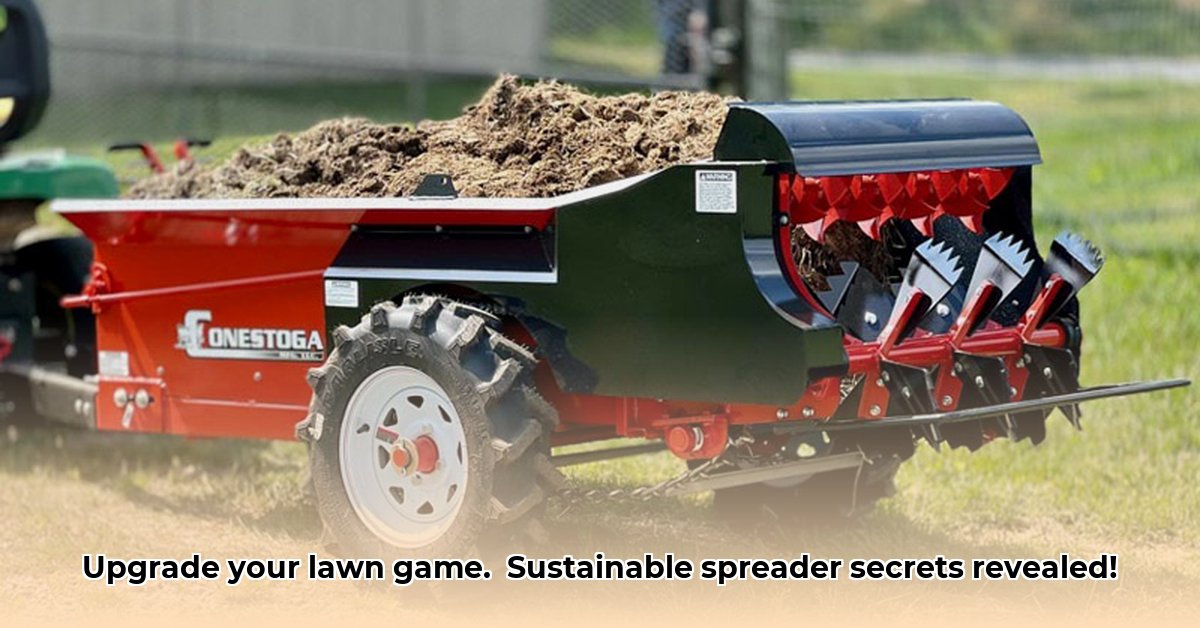
Efficient and sustainable fertilizer and seed application are crucial for modern agriculture. Pull-behind spreaders for lawn tractors offer a practical solution, and their market is steadily expanding. For heavier-duty options, check out tractor attachments. This guide provides a comprehensive look at selecting, using, and maintaining these essential tools for achieving a healthy lawn while prioritizing environmental stewardship.
Types of Pull-Behind Spreaders
Pull-behind spreaders for lawn tractors come in various types, each suited for different applications and lawn sizes. The two primary categories are broadcast and drop spreaders.
Broadcast Spreaders: These spread material over a wide area, ideal for large lawns requiring quick coverage. However, they may lack the precision of drop spreaders, leading to potential over-application or uneven distribution. Broadcast spreaders generally offer a lower initial cost.
Drop Spreaders: Drop spreaders deliver fertilizer or seed in a narrow band, providing greater precision for smaller areas or targeted applications like row planting. This precision comes at the cost of increased application time for larger areas and a generally higher purchase price.
Beyond these primary types, capacity (measured in pounds) varies widely. Smaller models are suitable for smaller lawns, while larger models can handle extensive acreage. Material compatibility is also a key factor; some spreaders are designed for fertilizer, others for seed, and some for lime or other materials. Always check the manufacturer's specifications to ensure compatibility. Consider factors like spread pattern uniformity, calibration accuracy (crucial for efficient use), and material compatibility when choosing a model.
Choosing the Right Spreader: A Step-by-Step Guide
Selecting the optimal spreader involves careful consideration of several factors. This step-by-step guide simplifies the process:
- Assess Your Lawn: Measure your lawn's area to determine the required spreader capacity. Larger lawns require higher-capacity models.
- Identify Application Materials: Determine what materials you will spread (fertilizer, seed, lime, etc.). This dictates the spreader type and potential adjustments.
- Define Your Budget: Set a realistic budget to guide your selection from the wide range of available models.
- Prioritize Precision or Speed: Decide if precise application or rapid coverage is more important. This choice will influence the selection between broadcast and drop spreaders.
- Evaluate Key Features: Consider factors like spread width, hopper capacity, calibration features (essential for accuracy), and ease of use and maintenance.
- Research and Read Reviews: Before purchasing, review online resources and user feedback to gauge the performance and reliability of different models.
Proper Operation and Maintenance
Regular maintenance is key to extending the life of your spreader and ensuring accurate application.
- Calibration: Before each use, calibrate your spreader to achieve the desired application rate. This process typically involves adjusting settings until the spreader delivers a consistent amount of material over a measured area. Refer to your manufacturer's instructions for detailed calibration procedures. Accurate calibration minimizes waste and optimizes results.
- Manufacturer’s Instructions: Always follow the manufacturer's instructions for operation and safety procedures.
- Cleaning: Clean the spreader thoroughly after each use to prevent clogging and material build-up.
- Regular Inspection: Periodically inspect moving parts for wear and tear, and lubricate as needed to ensure smooth operation.
- Safety: Always wear appropriate protective gear during operation and observe all safety precautions.
Sustainability Considerations
Sustainable lawn care extends beyond the choice of fertilizer to include the equipment used.
- Precision Application: Precise spreaders minimize fertilizer waste and runoff, protecting water quality and reducing environmental impact.
- Durability and Repair: Choose a durable, repairable spreader to minimize replacement needs and reduce waste.
- End-of-Life Management: Consider the spreader's end-of-life management. Look for materials that are easily recyclable or repurposable.
Future Trends: Innovation in Spreader Technology
Technological advancements continue to shape the future of spreader technology.
- GPS Integration: GPS-guided spreaders enable variable-rate application (VRA), adjusting application rates based on the specific needs of different lawn areas. This enhances precision and optimizes fertilizer use.
- Smart Technology: Expect further integration of smart technologies, potentially including sensors and data analysis tools for enhanced efficiency and monitoring. Manufacturers are continuously developing more sustainable and user-friendly models. Regulatory bodies also play a key role in shaping the future of spreader technology through emission standards and safety regulations.
Conclusion
Choosing the right pull-behind spreader is crucial for efficient and sustainable lawn care. By carefully considering your lawn's size, application needs, and budget, and by following best practices for operation and maintenance, you can achieve a healthy lawn while minimizing environmental impact. Remember that investing in a high-quality, durable spreader is a long-term investment in both your lawn and the environment.